Why upgrade your lighting
Lighting accounts for a significant portion of a typical property energy bill, often representing fifteen to twenty percent of total electricity consumption. Upgrading to energy-efficient lighting is one of the most cost-effective improvements a property owner can make, with LED bulbs using up to eighty percent less energy than traditional incandescent bulbs while lasting up to twenty-five times longer, according to Energy Star. The savings on replacement costs alone make the upgrade worthwhile.
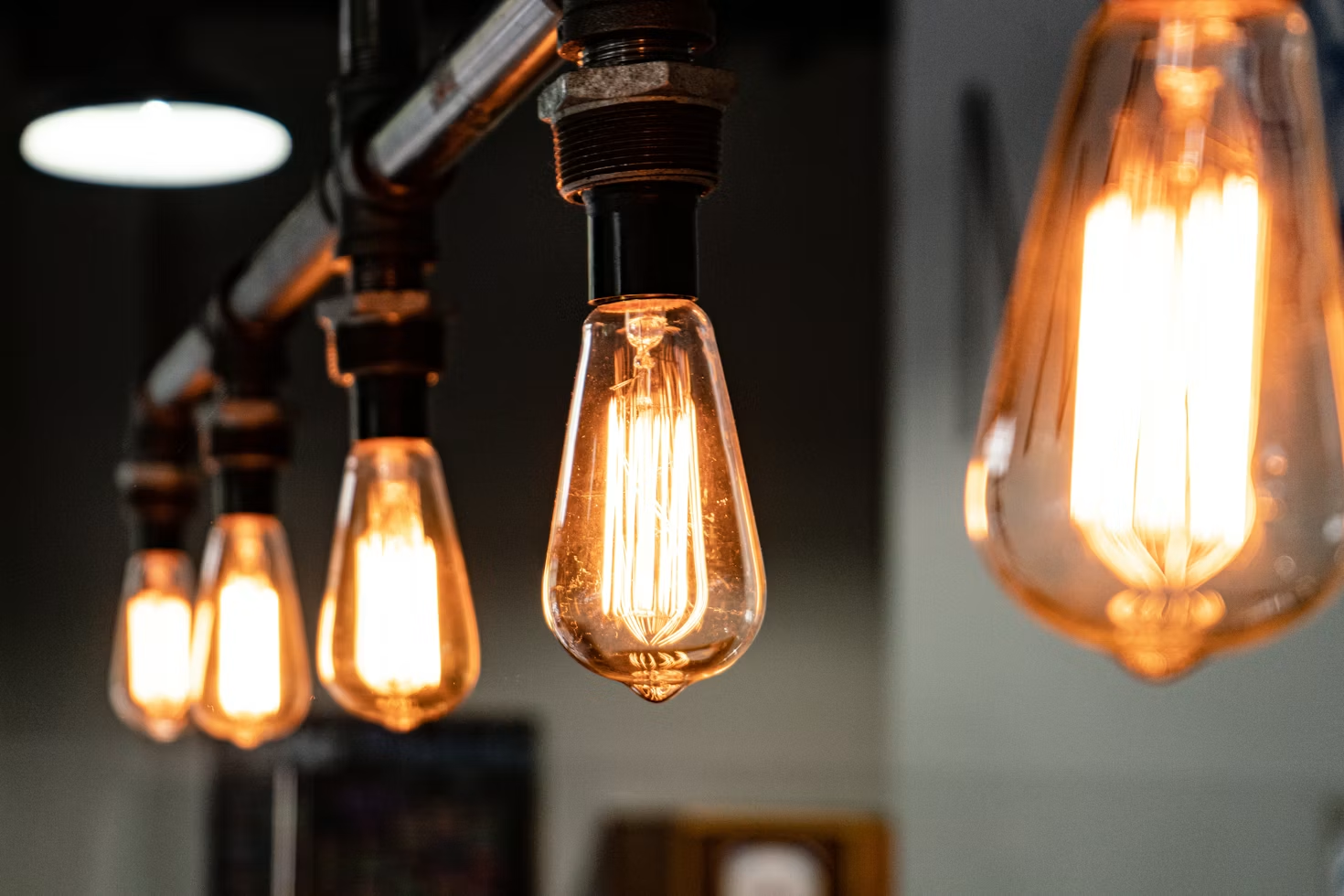
Beyond energy savings, modern lighting technology offers dramatically improved light quality. LED bulbs are available in a range of color temperatures, from warm amber tones that mimic traditional incandescent lighting to cool daylight hues that are ideal for task lighting and commercial spaces. High color rendering index ratings ensure that colors appear natural and vibrant under LED lighting, which is especially important in retail, art, and design environments.
The longevity of LED lighting is another compelling advantage. A typical LED bulb rated for twenty-five thousand hours will last more than twenty-two years based on average household usage of three hours per day. For commercial properties where lights operate eight to twelve hours per day, LED bulbs still provide years of reliable service before needing replacement. This durability translates to significant savings in maintenance labor and replacement material costs.
Types of energy-efficient lighting
LED bulbs are available in every standard shape and base configuration, making it easy to replace existing bulbs without modifying fixtures. From standard A19 bulbs for lamps and ceiling fixtures to reflector bulbs for recessed cans, decorative bulbs for chandeliers, and tube lights for garages and commercial spaces, there is an LED option for virtually every application. Many LED bulbs are also dimmable, though compatibility with existing dimmer switches should be verified before installation.
Lighting fixtures designed specifically for LED bulbs offer additional benefits beyond what retrofit bulbs can provide. Integrated LED fixtures have the LEDs built directly into the fixture, eliminating the need for replaceable bulbs and allowing for sleeker, more streamlined designs. These fixtures often have better thermal management than retrofit bulbs, which helps maintain light output and extends the life of the LEDs.
Commercial and industrial properties may benefit from high-bay LED fixtures, linear strip lights, and LED panel lights that provide uniform illumination across large spaces. These fixtures are designed for the demanding conditions of warehouses, manufacturing facilities, and retail environments, offering high light output, durability, and energy efficiency. Many commercial LED fixtures also support advanced controls like occupancy sensors and daylight harvesting. The US Department of Energy provides resources on commercial lighting efficiency.
Smart lighting controls
Smart lighting controls take energy efficiency to the next level by automating when and how lights are used. Occupancy sensors detect when a room is occupied and turn lights on automatically, then turn them off when the space is vacant. This eliminates the energy waste that occurs when lights are left on in unoccupied rooms, which is especially valuable in commercial restrooms, conference rooms, and storage areas.
Daylight harvesting systems use photosensors to measure the amount of natural light entering a space and automatically adjust artificial lighting levels to maintain consistent illumination. In spaces with significant windows or skylights, daylight harvesting can reduce lighting energy consumption by thirty to sixty percent. This technology is increasingly common in commercial buildings and is becoming more accessible for residential applications as well.
Wireless lighting control systems allow property owners to manage their lighting from smartphones, tablets, or computers. Scheduling features enable lights to turn on and off at preset times, simulating occupancy for security purposes and ensuring that lights are not left on overnight. Remote control capabilities provide the convenience of turning off lights from anywhere, eliminating the worry about whether you left a light on when you left the house. Contact us to learn about smart lighting options for your property.
Commercial lighting considerations
Commercial properties face unique lighting challenges that require careful planning and professional design. Proper light levels must be maintained for safety, productivity, and compliance with building codes. An experienced electrical contractor can perform a lighting audit to evaluate existing conditions, identify opportunities for improvement, and design a system that meets the specific needs of the space while maximizing energy savings.
Many utility companies offer rebates and incentives for commercial lighting upgrades, significantly reducing the upfront cost of the project. These programs are designed to encourage energy efficiency and can cover a substantial portion of the material and installation costs. A knowledgeable electrical contractor can help navigate the rebate application process and ensure that the project qualifies for available incentives. Check Energy Star for current rebate programs.
Emergency lighting and exit sign requirements must also be considered when planning a commercial lighting upgrade. Battery backup systems, emergency lighting fixtures, and illuminated exit signs must comply with local fire and safety codes. LED emergency lighting fixtures are available that combine energy efficiency with the reliability required for life safety applications, providing clear illumination during power outages and emergencies.
Installation and payback
Residential lighting upgrades are typically straightforward and can often be completed by a homeowner with basic DIY skills. Replacing bulbs is as simple as screwing in a new bulb, though care should be taken to select the correct bulb shape, base type, and color temperature for each application. For fixture replacements or new installations, hiring a licensed electrician ensures the work is done safely and meets code requirements.
Commercial lighting upgrades are more complex and should always be handled by a qualified electrical contractor. The work may involve rewiring, fixture replacement, control system installation, and coordination with utility rebate programs. A professional contractor will manage the entire process from design through installation, ensuring that the project is completed on time, on budget, and in compliance with all applicable codes.
The payback period for lighting upgrades varies depending on the scope of the project and local energy rates, but most lighting improvements pay for themselves through energy savings within one to three years. After the payback period, the savings continue to accumulate, providing ongoing financial benefits for the life of the lighting system. Combined with reduced maintenance costs and improved light quality, the return on investment for energy-efficient lighting is among the best of any property improvement. Request a consultation for your lighting upgrade project.